Quick Facts
Funding for facility construction has come primarily from grants including:
- Nebraska Environmental Trust, a beneficiary of the Nebraska State Lottery
- Waste Reduction and Recycling Incentive Fund of the Nebraska Department of Environmental Quality
- Peter Kiewit Foundation
- Omaha World-Herald Foundation
4001 S
The facility is located at 4001 South 120th Street in Omaha
2005
Opened on Wednesday June 1, 2005
Ken Hahn
Designed by Ken Hahn Architects
5
The site is just over 5 acres
1
Research and design of the building took well over 1 year to complete
5,612
Square feet of covered and indoor work space
2,520
Square feet of indoor support facilities
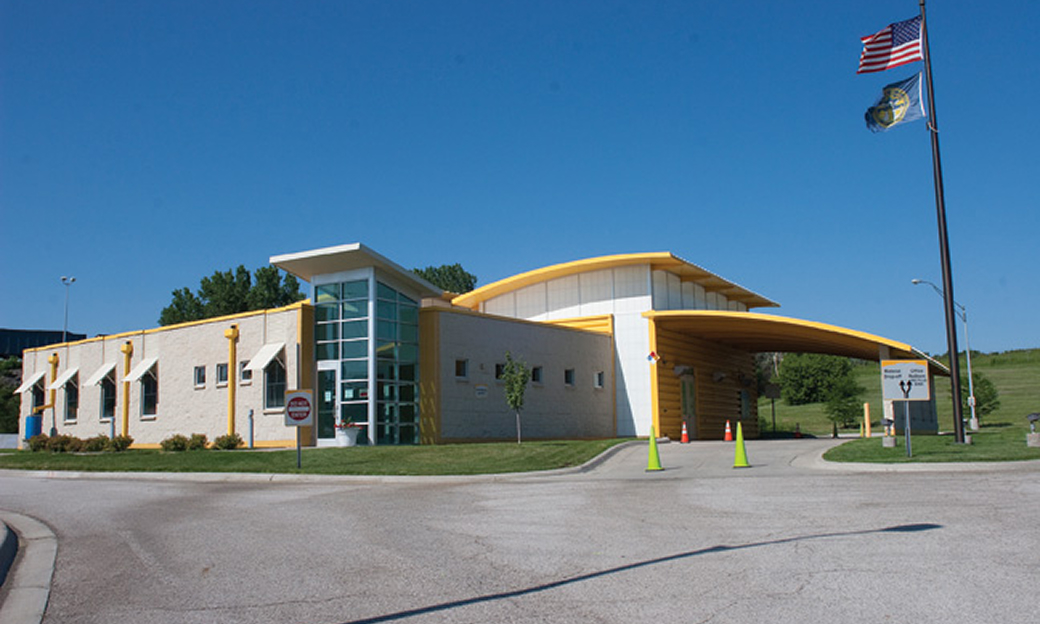
Approximate view of the building from 120th Street, North of the Facility.
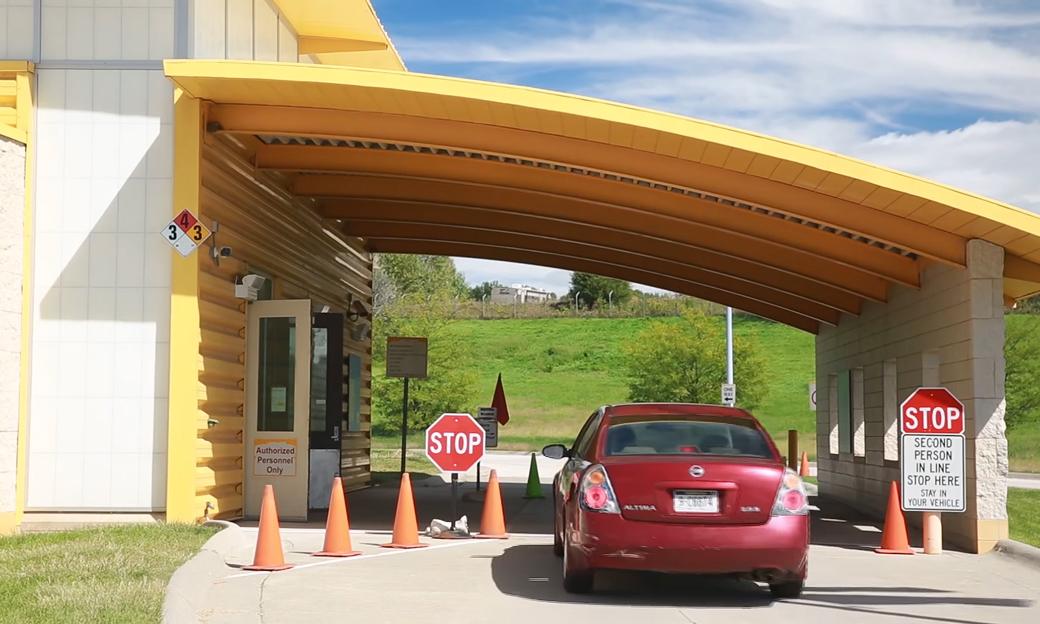
View of the Facility drop-off area.
Facility Overview
Safe Use, Storage
& Handling
General outline of what to expect at the facility, and how to store & transport material to the facility.
Always follow the label directions for all home, lawn and garden chemicals and cleaners. If the label directions are unclear contact the manufacturer, the cooperative extension or the health department.
Most chemicals should not be allowed to freeze. Check label or manufacturer.
Always store chemicals in their original container.
Combining chemicals can be dangerous. Don’t combine chemicals unless there are manufacturer’s directions on how to do so.
Always clearly label and date chemicals not in their original containers. Chemicals that have been diluted, record the concentration on the container.
If a metal container is heavily rusted and vulnerable to leaking, place the container in a heavy weight or double layered plastic bag, then set the container in a plastic bucket or tub. If available, pour a 1 – 2 inch layer of kitty litter in the bucket to absorb any leaks.
If the original container is missing it’s lid and a replacement is not available, you should pour the chemical into a replacement container. The replacement container should be made out of the same material as the original container (e.g. glass, metal, plastic). Label the new container, note on the container that the chemical has not been diluted. Be sure to keep the original container and tape, tie or rubber band it to the replacement container.
Other Useful Info
Hours of Operation

Wednesday
9:00 am – 4:45 pm
Drop-offs Accepted and ReStore Open
Thursday
9:00 am – 6:15 pm
Drop-offs Accepted and ReStore Open
Friday
9:00 am – 4:45 pm
Drop-offs Accepted and ReStore Open
Saturday
Drop-offs Accepted by Appointment Only. To make an appointment, click here.